“Premium-looking” workwear is not a certification or a single fabric claim. For a buyer, it is a set of visible decisions that should hold together across sizes, garment colors and repeat orders: fit, construction, fabric presentation and controlled branding.
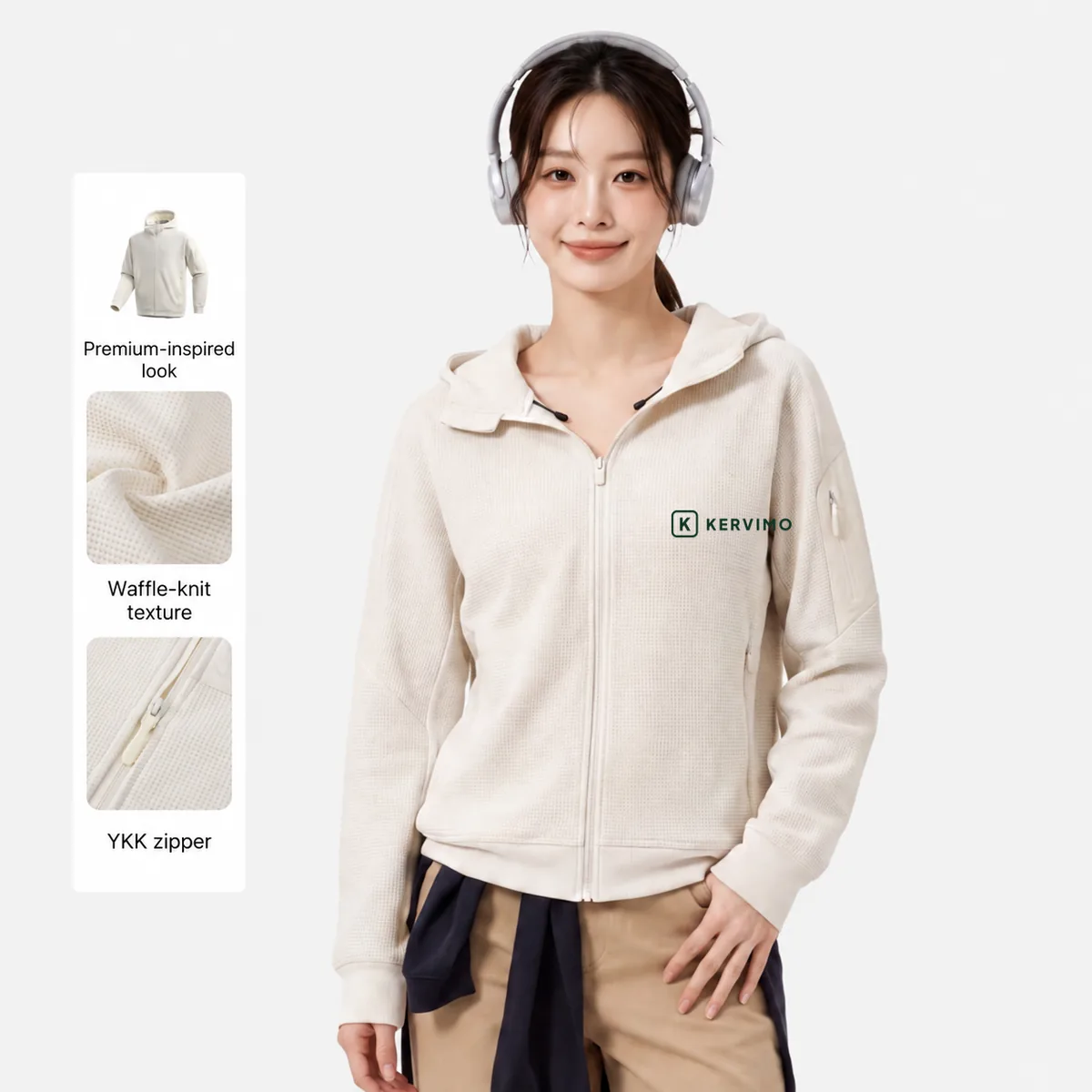
1. Check the silhouette on real wearers
Review shoulder width, body length, sleeve length and ease of movement on representative sizes. A garment may look polished on one model but vary across the size curve. Ask for the style-specific size chart and sample. Check that the wearer can sit, reach and layer the garment as intended.
2. Ask for measurable fabric information
Use composition and fabric weight where they are published, then request missing details rather than inferring them from a photo. The KERVIMO 68001 polo, for example, is listed at 190 ± 5 g/m² with 50% cotton, 45% polyester and 5% elastane. That is a concrete product reference; it does not automatically mean the polo is “premium” for every use. Match the specification to the buyer’s climate, preferred hand feel and care requirements through a sample.
3. Inspect construction and trim at the sample stage
Look at seam consistency, collar or neckline shape, closures, pocket alignment and finishing where the design makes those details visible. The Birdhouse Waffle Zip Hoodie listing describes waffle texture and a YKK zipper reference. Confirm that the current production specification matches the sample and quote. Do not generalize one product’s trim or finish to the entire collection.
4. Keep branding proportional to the garment
Approve the logo dimensions and clear space on the actual product, not only on a flat mockup. Small chest branding may keep a minimal layer versatile; larger marks may be easier to identify at an event or across a service area. Review the proposed decoration method against the art file, fabric and quantity, then approve a sample or production-equivalent proof.
5. Check color repeatability and reorder records
Choose a limited palette, approve a physical shade reference if color is critical, and record the model and color together. Save artwork version, logo placement, size breakdown and the approved sample with the quote. Confirm availability and color continuity again at reorder rather than assuming every shade is unchanged.
Compare products against a written checklist
- Published composition, weight and size range
- Sample fit on representative wearers
- Construction details and care information verified for that model
- Logo size, position and decoration approved on the garment
- Color reference and reorder details saved with the order
Browse the Birdhouse Waffle Zip Hoodie and the full catalog. In a project inquiry, ask about the specific model, sample, decoration and size range you need.
Frequently asked questions
Does a premium appearance require a large logo?
No. Brand recognition depends on the design and use. A smaller mark can suit a minimal program if its size, contrast and position are intentional.
Can a product photograph prove fabric quality?
No. Use the product page to shortlist, then verify composition, weight, care details and construction on the current specification and sample.