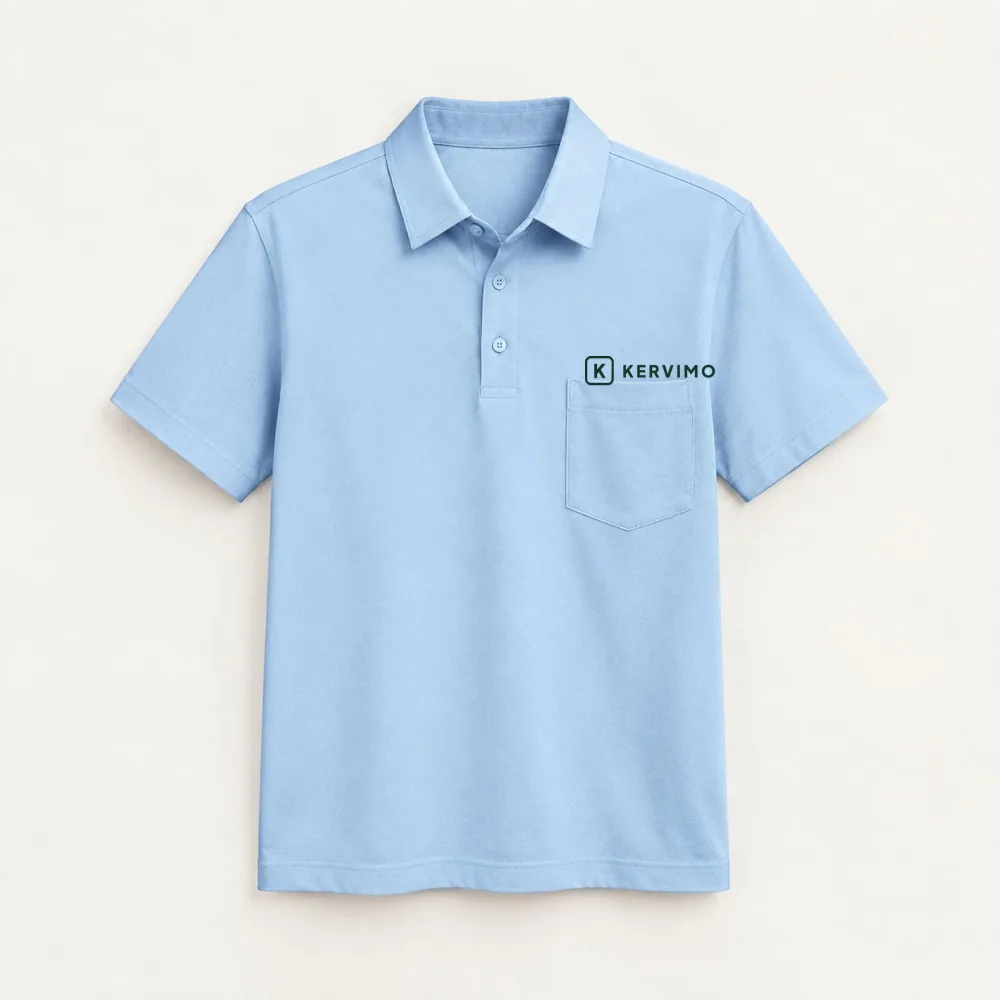
Hospitality uniforms should be planned by guest contact, movement and garment layer. A front-desk team, dining-room servers and facilities staff may share a color palette without wearing the same item. The practical goal is a coordinated appearance that still fits the job.
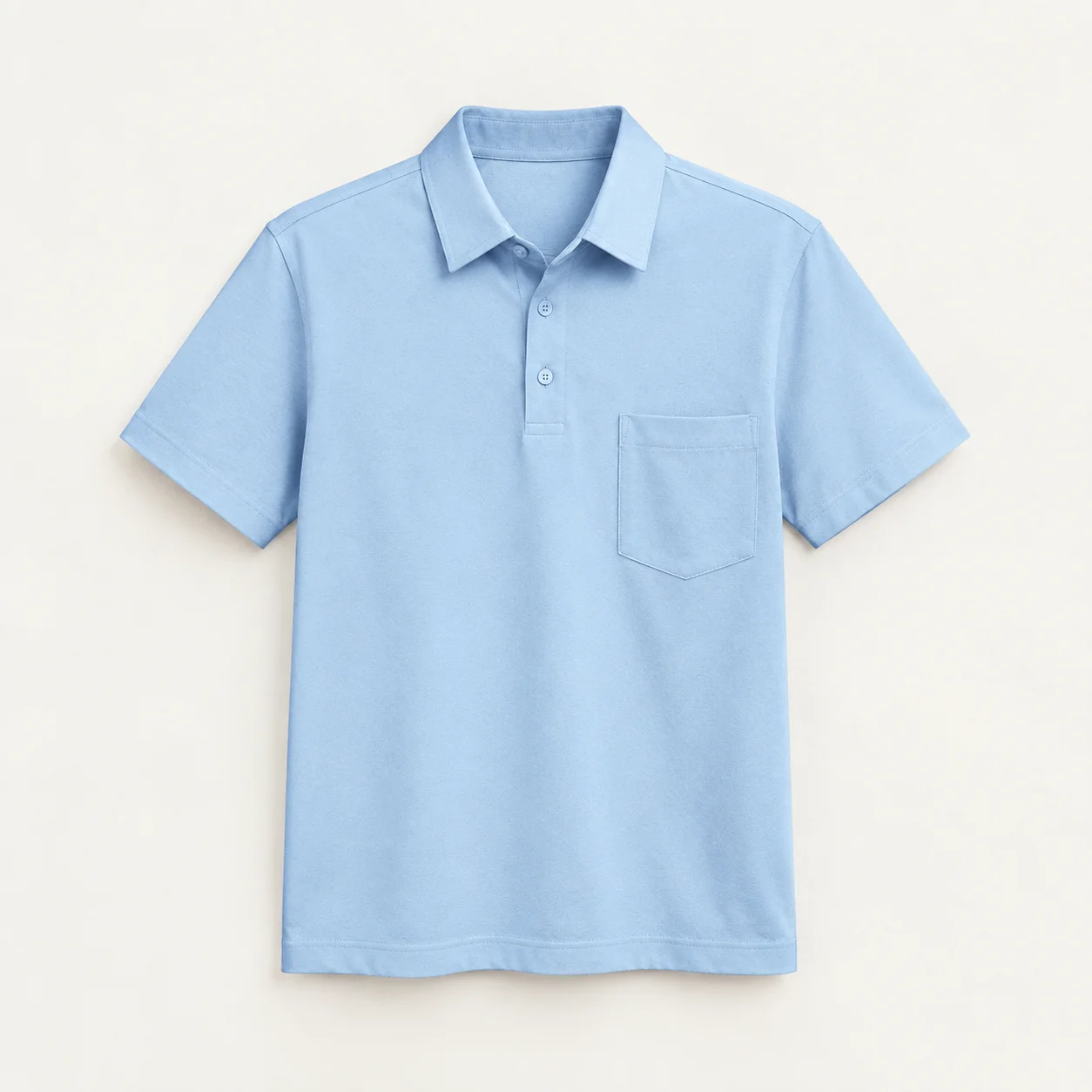
Build the uniform set by role
| Role | Uniform decision | Sample checks |
|---|---|---|
| Reception, concierge or showroom | Consider a collared polo such as KERVIMO 68001 for a consistent front-of-house look. | Collar shape, body length, shade and logo scale at guest-facing distance |
| Dining or retail-floor service | Check the same polo or a coordinated top against movement and the venue’s dress standard. | Reach, bend, sleeve opening, apron interaction and care label |
| Housekeeping or back-of-house support | Choose a garment around the actual tasks; do not assume a guest-facing polo is the best fit. | Coverage, movement, layering and laundering instructions |
| Facilities maintenance | A work jacket such as KERVIMO M801–M805 may be a more relevant starting point than a hospitality polo. | Pocket access, garment weight, color and the role’s safety requirements |
The last example is a work jacket, not a front-desk uniform. The 6968 catalog entry identifies M801–M805, a T/C 65/35 work jacket at 235 ± 5 g/m² in sizes S–5XL. Use it only if the style and specification suit a back-of-house or maintenance role.
Check the polo specification and wear conditions
The KERVIMO 68001 catalog entry lists 50% cotton, 45% polyester and 5% elastane, 190 ± 5 g/m², and sizes S–6XL. These details help identify the product, but they do not guarantee that it meets a venue’s preferred feel, fit or laundry routine. Request the current size chart, care information and a sample. Have employees try the garment during a normal shift or representative movements before confirming the size curve.
If employees wear an apron, cardigan or jacket over the top, check whether the logo remains visible and whether the chosen decoration remains comfortable under that layer. Approve logo position on each garment separately; a position that works on a polo may be hidden by an apron strap.
Make the order easy to replenish
Record quantities by location, role, model, color and size. Keep optional replacement pieces separate from the initial allocation so the quote reflects actual demand. Save the approved color reference, artwork file, logo dimensions and sample notes with the order record. Each selected style has a 100-piece minimum. For each reorder, request current color availability, product details and bulk-production and shipping dates in the written quote.
Hospitality uniform approval checklist
- Role list and guest-contact level
- Garment model and layer by role
- Size split by model, not just by employee
- Logo visibility with aprons or outer layers
- Care label and representative-wearer sample review
- Delivery locations, quantities and replacement plan
Review the 68001 polo page and the polo collection. Send role counts, size quantities and your venue’s care or branding requirements through the project inquiry form.
Frequently asked questions
Should every hospitality employee wear the same item?
Keep the palette and logo rules consistent, but select garments by role. The tasks and layers for front desk, service, housekeeping and maintenance are different.
Can I assume a workwear jacket is suitable for hospitality?
No. Compare its design and specifications with the role. A utility work jacket may suit facilities staff but look and function differently from a guest-facing uniform.