A corporate uniform works as a brand system when each role has the right garment, the team shares a recognizable visual language, and buyers can repeat the same decision at the next reorder. Start with work tasks and customer contact—not a logo mockup.
Map garments to jobs before choosing colors
List the people who will wear the uniform, where they work, how they move, and whether they meet customers. A receptionist, a mobile technician and a warehouse picker should not automatically receive the same garment. Build a role matrix first, then choose the smallest practical range.
| Role or setting | Starting garment direction | What to verify |
|---|---|---|
| Reception, showroom or client meetings | Short-sleeve polo such as KERVIMO 68001 | Collar shape, size range, color consistency and logo scale |
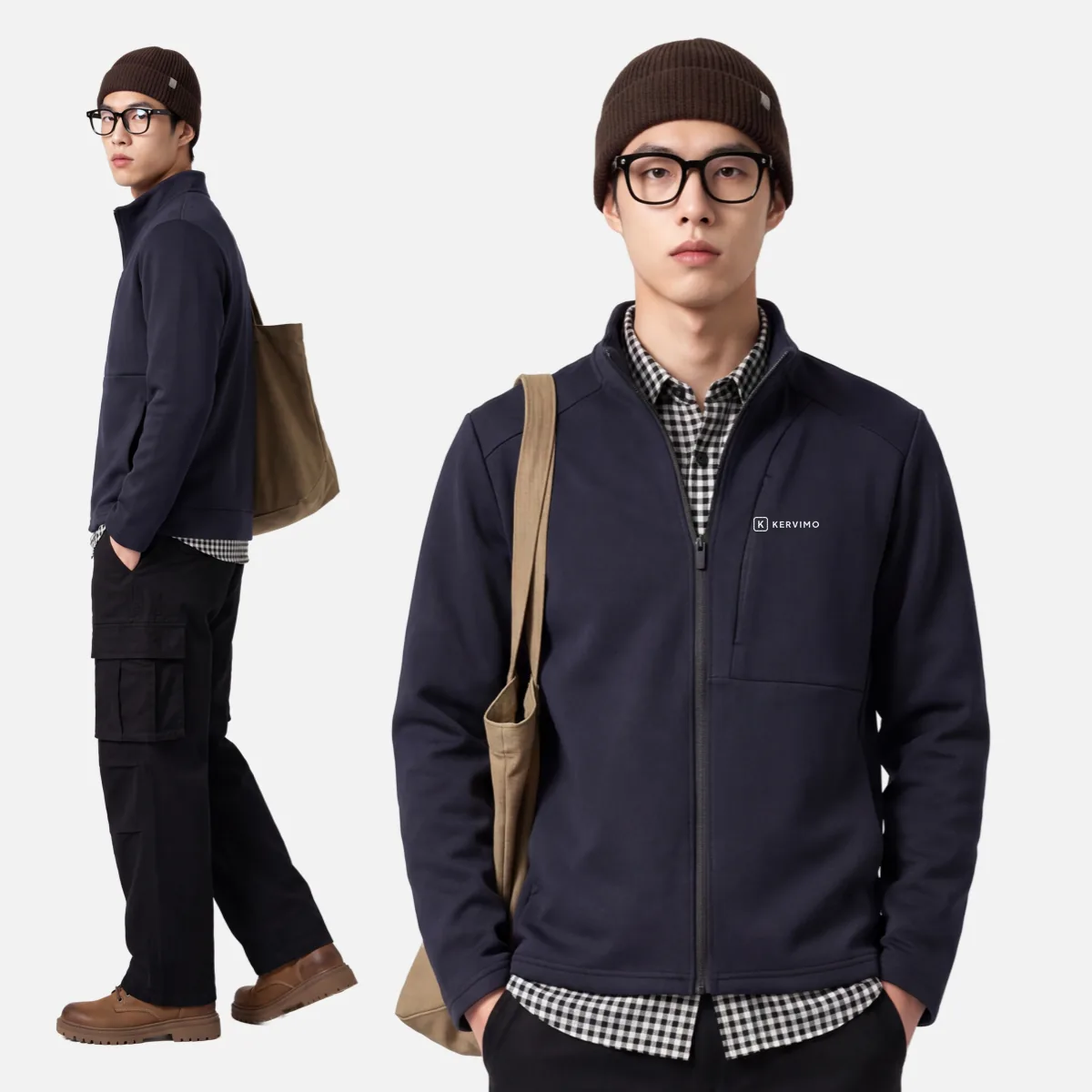
| Office-to-site travel or cool indoor spaces | A zip layer such as the High-Smart stand-collar jacket | Layering room, sleeve reach, closure and the final style specification |
| Maintenance or back-of-house tasks | A work jacket such as KERVIMO M801–M805 | Pocket placement, movement, garment weight and care instructions |
These are catalog-based starting points, not safety recommendations. If a job requires certified protective clothing or a specific performance level, confirm the applicable standard and product documentation before selecting a garment.
Set one visual standard across different products
Choose a small shared palette and record the exact color names or references used for each style. Two items that look similar on a screen may differ in real fabric. Request a fabric reference or sample when a close match matters, and decide which colors can vary by role without weakening the overall identity.
Write down the logo artwork, width and height, garment view, position and decoration method. A chest mark may suit customer-facing tops; a sleeve or back mark may be easier to identify in a busy work area. Check placement separately on polos, jackets and any garment worn over another layer. Ask the supplier to confirm whether the artwork and chosen method suit the product surface.
Approve the fit across the size range
Do not size the whole team from one wearer. Collect quantities by style and size, check the size chart for each garment, and arrange a sample when fit or shade is important. Ask representative wearers to sit, reach, bend and put on the layer they will actually wear underneath. Record changes before artwork approval so the sample is not judged against the wrong size or use.
Keep a reorder record, not just a logo file
Store one approved reference with the product name or model, color, size breakdown, artwork version, logo dimensions and position, decoration method, sample notes and quote date. This reduces ambiguity when another department joins or a new team member needs a replacement. Each selected style has a 100-piece minimum. Every new order quote states current style availability, approved product and logo details, plus bulk-production and shipping dates.
Corporate uniform brief checklist
- Roles, work locations and customer-contact needs
- Product and color by role, with a clear reason for each exception
- Quantity by product, color and size
- Artwork file, logo dimensions, placement and decoration method
- Sample decision, required-in-hand date and delivery destination
Browse the KERVIMO workwear catalog. In your project inquiry, include the role matrix, selected product links, quantities and target date so the team can quote the actual mix.
Frequently asked questions
Should every department wear the same uniform?
Use shared colors and a consistent logo standard, then select garments around each role’s tasks. A single garment is only practical when the work conditions and fit needs are genuinely similar.
Is a screen mockup enough to approve a uniform?
No. Use it to discuss direction, then check the physical sample for fit, shade, construction and logo scale before approving production.