Chinese character
Minimum character footprint reference.
KERVIMO / THE EMBROIDERY EDIT
Your identity, expressed in thread. Explore three ways to bring depth, texture and character to company uniforms.
Explore the techniques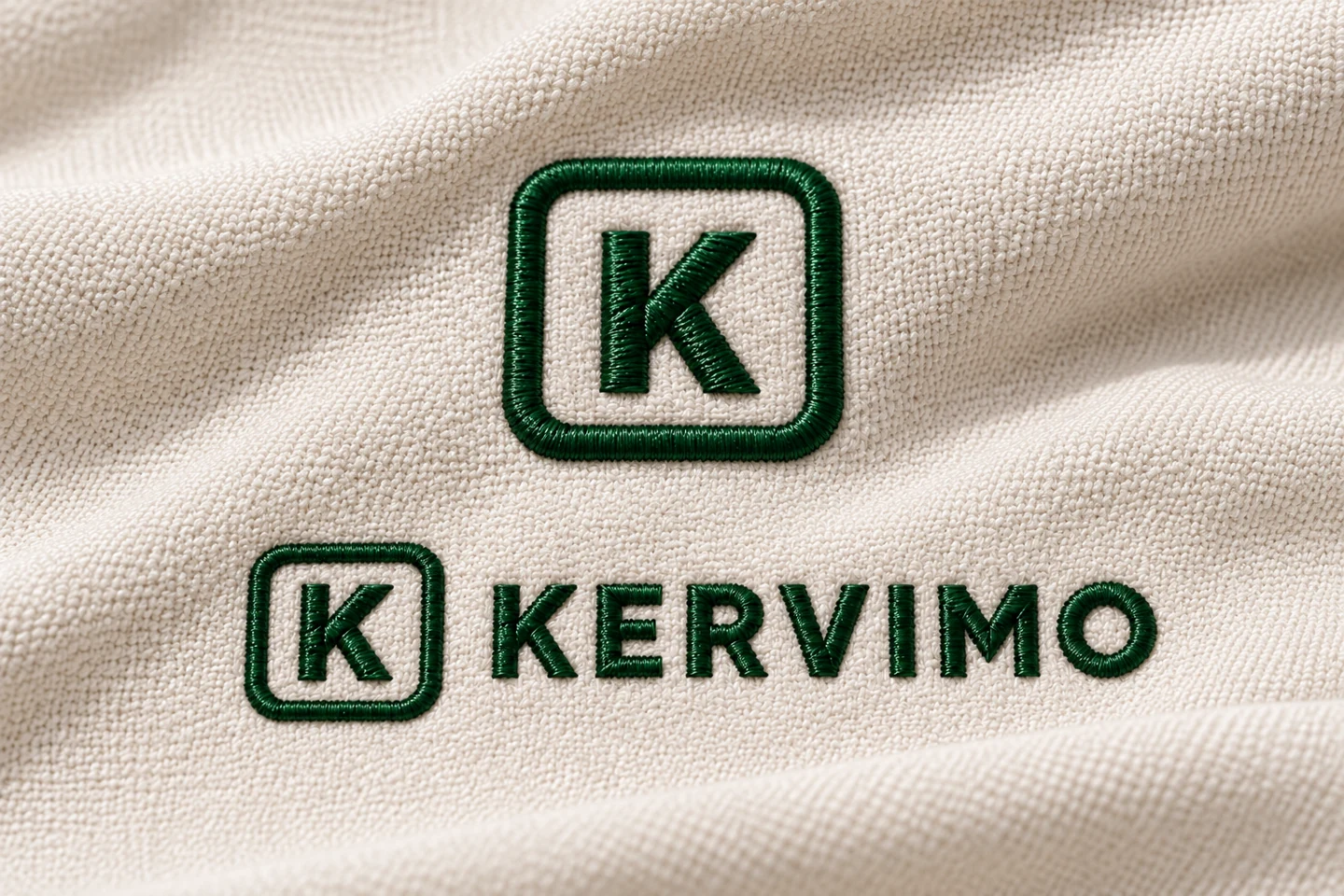
A DIFFERENT KIND OF BRAND IMPRESSION
Embroidery uses thread to form a logo within the fabric. Its texture and changing light create a distinctive finish for polo shirts, work uniforms and jackets. Choose the technique around the artwork and garment, then confirm the result with a physical sample.
The material studies below are AI-generated design illustrations using KERVIMO branding. They show a visual direction, rather than a delivered customer project or an approved production sample.
THE TECHNIQUE
Clean lines. A quiet lustre.
Closely spaced stitches span a narrow shape, creating a smooth surface that catches the light. Stitch direction gives lettering and outlines a precise, dimensional finish.
THE TECHNIQUE
A layer you can see.
A separate piece of fabric is cut to the design, positioned on the garment and secured with stitching. The contrast between fabric and thread creates a layered, badge-like character.
THE TECHNIQUE
Every stitch, in its place.
Short running stitches are arranged in offset rows to fill a shape. The result is an even, closely worked surface that follows broad or irregular areas without relying on long satin spans.
THE DETAILS, SIDE BY SIDE
Start with the shape.
Refine with the sample.
| What matters | 01 / Satin stitch | 02 / Appliqué | 03 / Tatami fill |
|---|---|---|---|
| Surface | Directional sheen, defined lines | Layered fabric and stitched edges | Fine, even rows of fill stitches |
| Character | Precise and polished | Tactile and dimensional | Balanced and closely worked |
| Artwork | Letters, narrow lines, small marks | Bold blocks, emblems, larger shapes | Broad fills and irregular shapes |
| Review carefully | Wide spans and fine detail | Small cutouts and fabric edges | Density, stitch count and stiffness |
| Color planning* | 6–8 colors | 6–8 colors | 3–5 colors |
*KERVIMO design-planning references, rather than universal machine limits. The final thread palette and construction are confirmed for the selected artwork and garment.
A CLEARER DESIGN BRIEF
Use these supplied design references
for satin stitch and appliqué.
Minimum character footprint reference.
Minimum character footprint reference.
Minimum stroke-width reference.
Keep tatami concepts to 3–5 colors.
Area is not letter height. The cm² values describe a character footprint. Readability also depends on typeface, line width, fabric and final logo size. Send the original artwork at the intended size for review; approve the physical sample before production.
FIND YOUR STARTING POINT
Choose a visual priority.
We’ll help refine the construction.
Satin stitch. Start here for lettering, defined outlines and a light-catching finish.
Explore this technique ↗BEYOND THE SURFACE
Artwork, fabric and placement
work as one.
The following table is a review checklist for your sample, rather than a fixed machine-setting chart. Final suitability, backing and stitch settings depend on the actual garment and artwork.
| Garment | Review before quoting | Check on the sample |
|---|---|---|
| Piqué polo | Fabric texture, stretch, logo size and placement relative to the placket. | Readable lettering, clean edges, fabric lying flat and the feel of the backing inside. |
| Loopback sweatshirt | Fabric weight, stretch and whether the chosen position crosses a rib, seam or pocket. | Logo shape and position on the worn garment, surface finish and comfort against the body. |
| Softshell or coated jacket | Confirm the actual fabric, lining, accessible panels, sealed seams and any claimed water resistance. | Approve the decoration method and any effect on the garment finish. Do not assume an embroidered area retains a waterproof rating. |
| Poly-cotton work shirt | Confirm composition from the product sheet; review pockets, seams and the intended logo position. | Placement with the shirt buttoned, legibility and whether the decoration interferes with pocket use. |
| Decision | Embroidery | Printing |
|---|---|---|
| How the logo is made | Thread is stitched into the garment. | The design is applied to the garment surface using an agreed printing method. |
| Artwork review | Check small lettering, line detail and how colors will be represented in thread. | Check image quality, colors, design size and the selected method. |
| Garment review | Confirm access to the panel, fabric response, backing and the inside finish. | Confirm fabric compatibility, placement and the resulting surface feel. |
| Cost comparison | Ask for artwork preparation, logo size, colors, positions and quantity to be included in the quote. | Compare the same garment, quantity, artwork and positions with the proposed printing method. |
| Approval | Inspect the stitched result on the selected garment. | Inspect the printed result on the selected garment. |
Choose by the actual sample and your team’s use, rather than assuming either method is always cheaper or more durable. Confirm garment care instructions and the agreed finish before ordering.
BEFORE YOU ORDER
Clear terms.
A sample you can approve.
The bulk minimum is 100 pieces per selected style. List quantities separately for every style in a multi-product inquiry.
Branded samples are paid. The written quote confirms the sample charge, logo requirements and shipping. Do not treat a standard garment sample price as a complete embroidery quotation.
Paid branded samples dispatch within 15 days. Dispatch means the sample is sent; it is not an arrival date. Confirm the delivery destination and shipping arrangements in your quote.
Include both methods and the required positions in your brief. We review suitability for each selected garment and confirm the agreed combination in the written quote.
List the destinations and quantities when requesting a quote. Split delivery, packing, shipping charges and timing need written confirmation before the order is approved.
FROM A MARK TO SOMETHING TANGIBLE
Share your logo, selected garment, size quantities and target date.
We’ll help shape a clear embroidery brief.
Explore teamwear solutions or illustrative project briefs.